
7.6 KiB
7.6 KiB
tags:: #todoist-task, STAF, ADMIN/MISSIONI, Attended Event, STAF date:: 09-06-2025 - 13:52 progress:: {{renderer :todomaster}}
-
Admin
collapsed:: true- L'evento inizia il 10 di Giugno e termina il 13
collapsed:: true
- ECMFA 10,11
- SLE 12, 13
- Il 13 fino alle 14:00
- Potrei pensare di ripartire il 13 Giugno
- Il 12 ci potrebbe essere il meeting del SC di SLE
- Partieri il 10 e tornare il 13
 {:height 361, :width 252}
- L'evento inizia il 10 di Giugno e termina il 13
collapsed:: true
-
Notes
-
Keynote at STAF 2025
collapsed:: true-
Modeling and LLMs in Continuous Software Engineering
- Anne Koziolek, Karlsruhe Institute of Technology Germany
- Abstract:
- The notion of continuous software engineering extends practices like continuous integration to view the entire software development lifecycle as a continuous, interconnected flow of activities. At the same time, recent advances in large language models (LLMs) have revolutionized the way machines process natural language—language that plays a central role throughout software engineering, from requirements elicitation and design discussions to documentation.
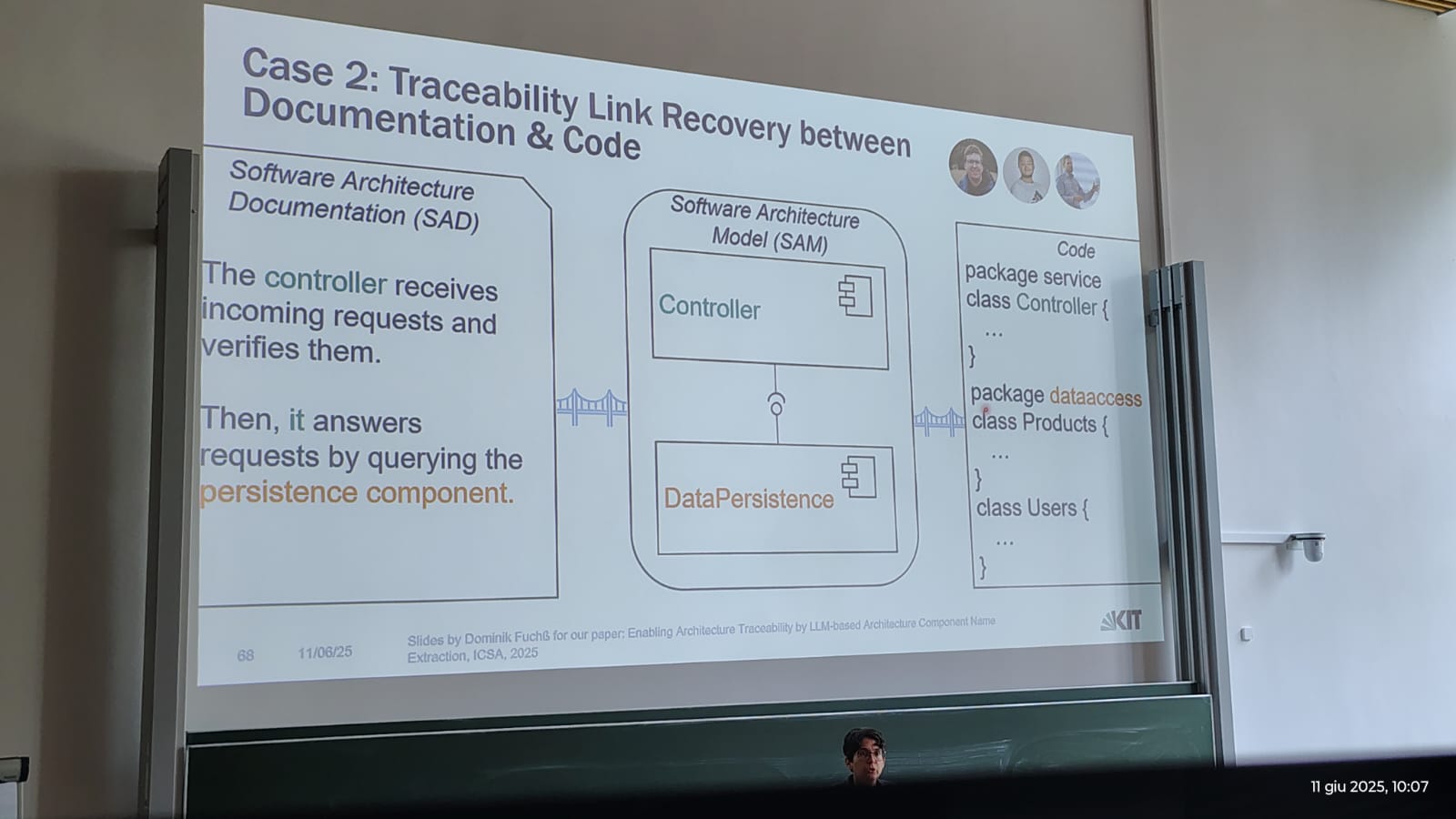
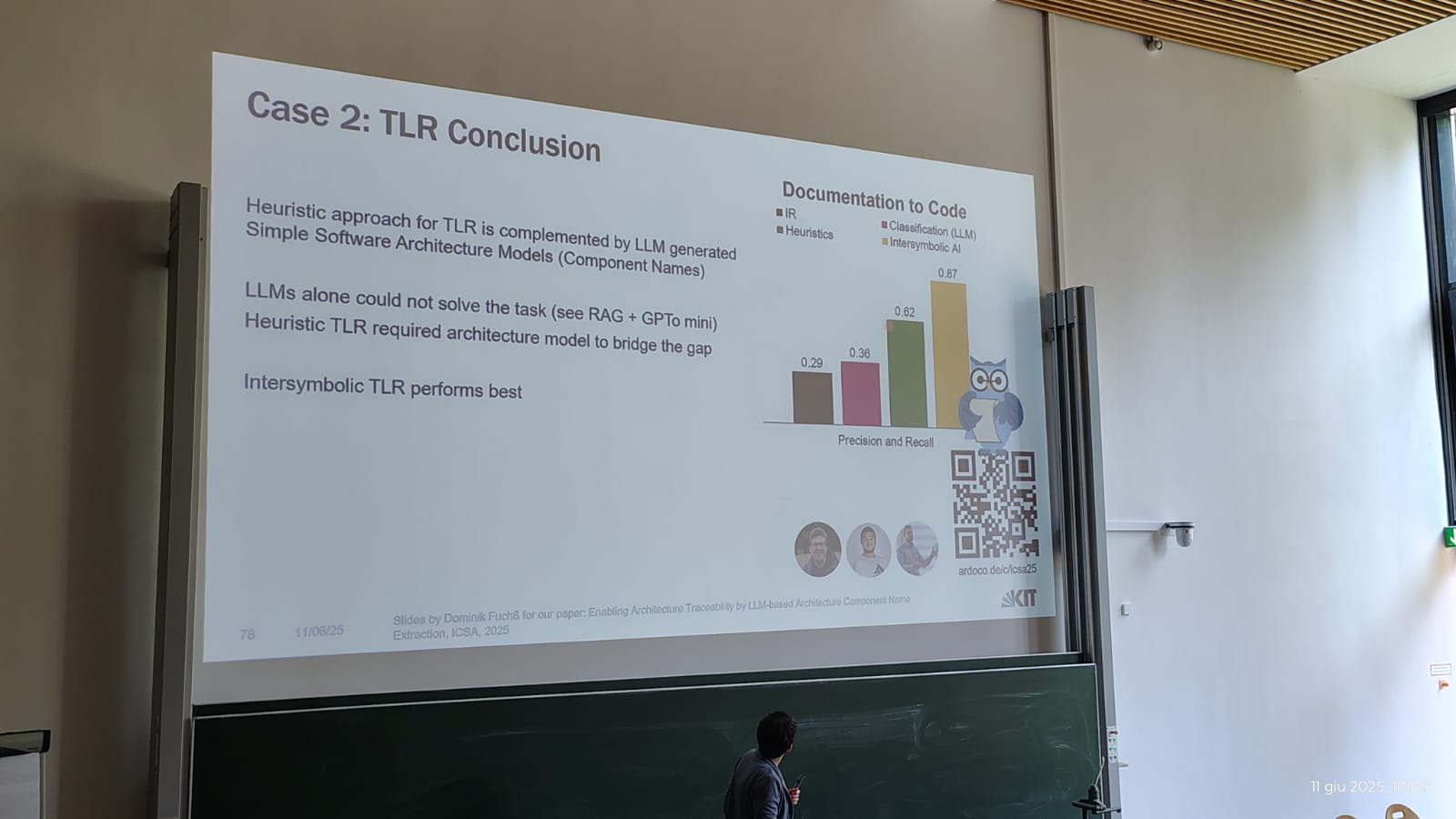
- In this talk, I will outline a vision for the role of models in continuous software engineering, focusing particularly on their use in design activities. I will argue that models will remain central to software engineering, even in an era of AI-assisted development, and explore what future design assistants might look like. One key capability of such assistants will be the ability to establish and use trace links between artifacts. I will present recent results showing how LLMs, combined with heuristic techniques, can achieve high precision and recall in this task.
- Looking ahead, I will share our vision for how model-driven techniques can support more agile development of cyber-physical systems, and our ideas how LLMs can contribute to realizing the long-standing goal of model consistency. Finally, time permitting, I will also reflect on the use of LLMs in navigating software engineering literature and research data.
- Notes
- Cost-efficient modeling
- automated extrection of models from other artefacts
- Automated model consistency to enable cost-efficient evolution
- Natural language as one view of the system to be keto consistent
- NoRBERT for Requirements classification 2020
- Models in Continuous Software ENgineering
- At the beginning the ideal process was the waterfall one. But it seems does not work proprely in most cases. Specifications and implementations are inevitably interwined. This because:
- hierarchical intertwinement: high-level design decisions inform lower-level requirements
- technical feasibility: non-feasible requirements are useless
- validation: what you see is what you require.
- Iterative planning then!
- {{renderer :mermaid_68493348-7f45-4787-95d3-54066d1c01fd, 3}}
collapsed:: true
-
graph LR
    A[Learn] --> B[Plan]
    B --> C[Build]
    C --> A
-
- Agile manifesto, 2001
- How to support cost-efficient modeling?
- {{renderer :mermaid_68493348-7f45-4787-95d3-54066d1c01fd, 3}}
collapsed:: true
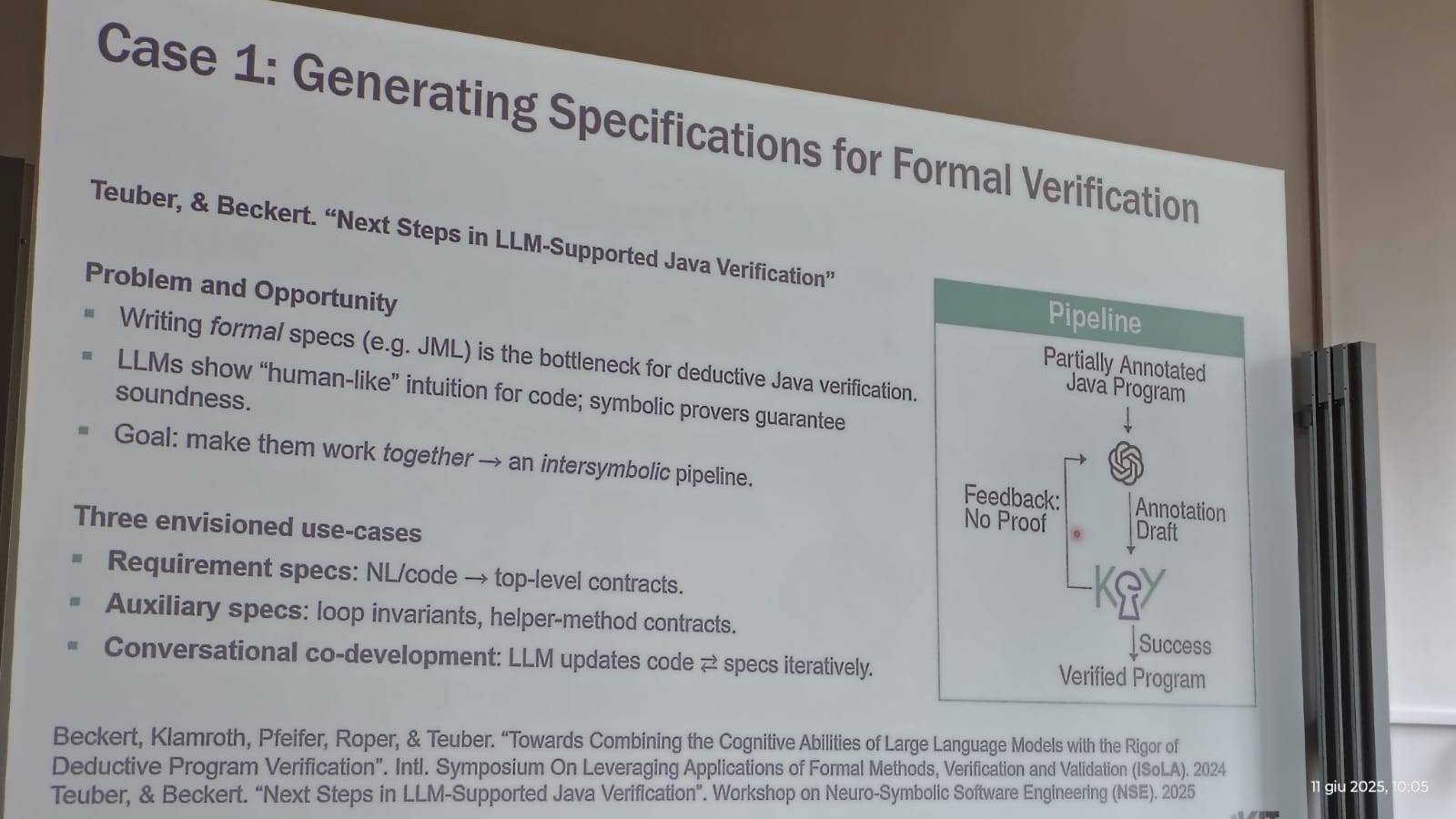
- LLMs
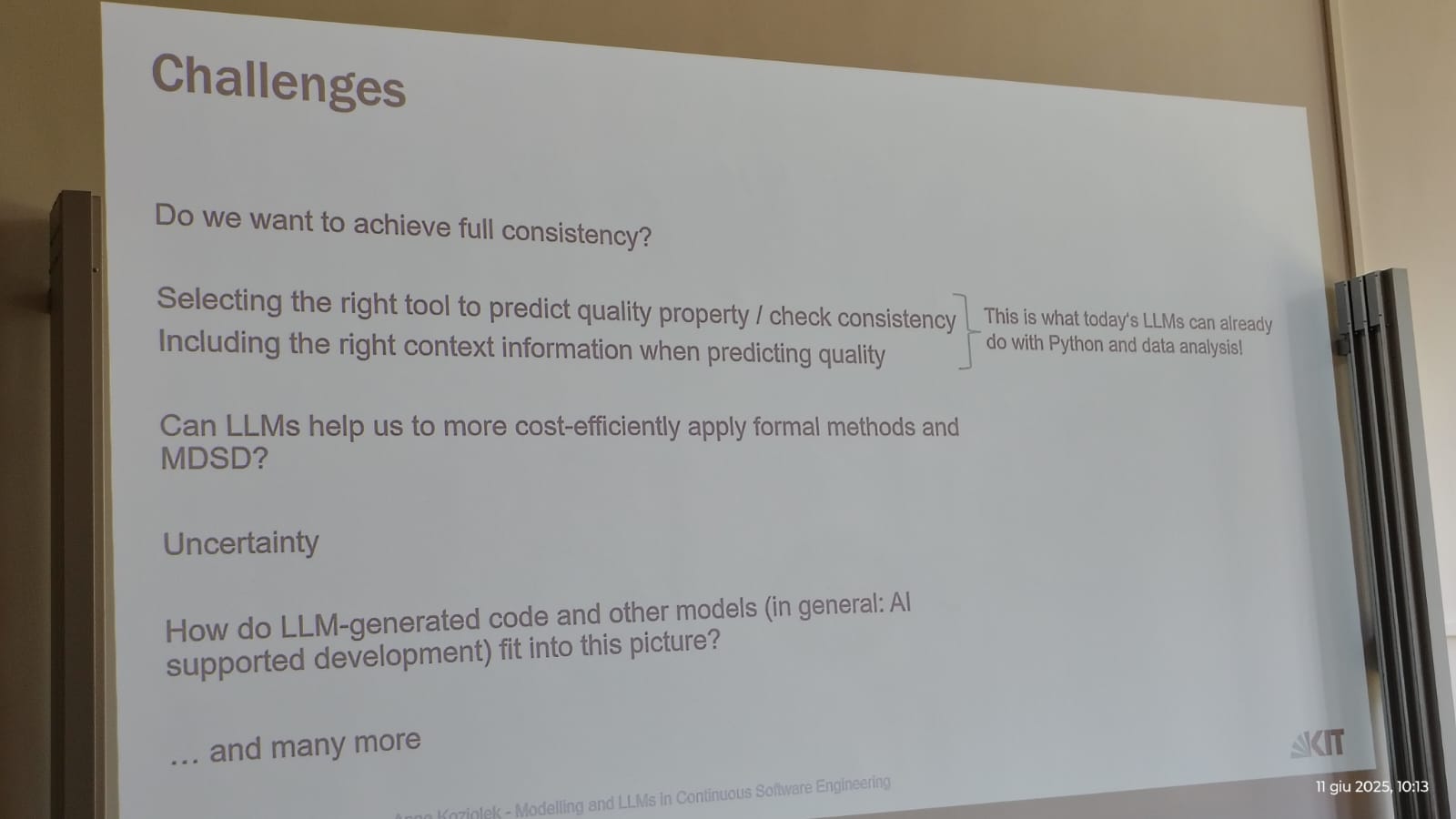
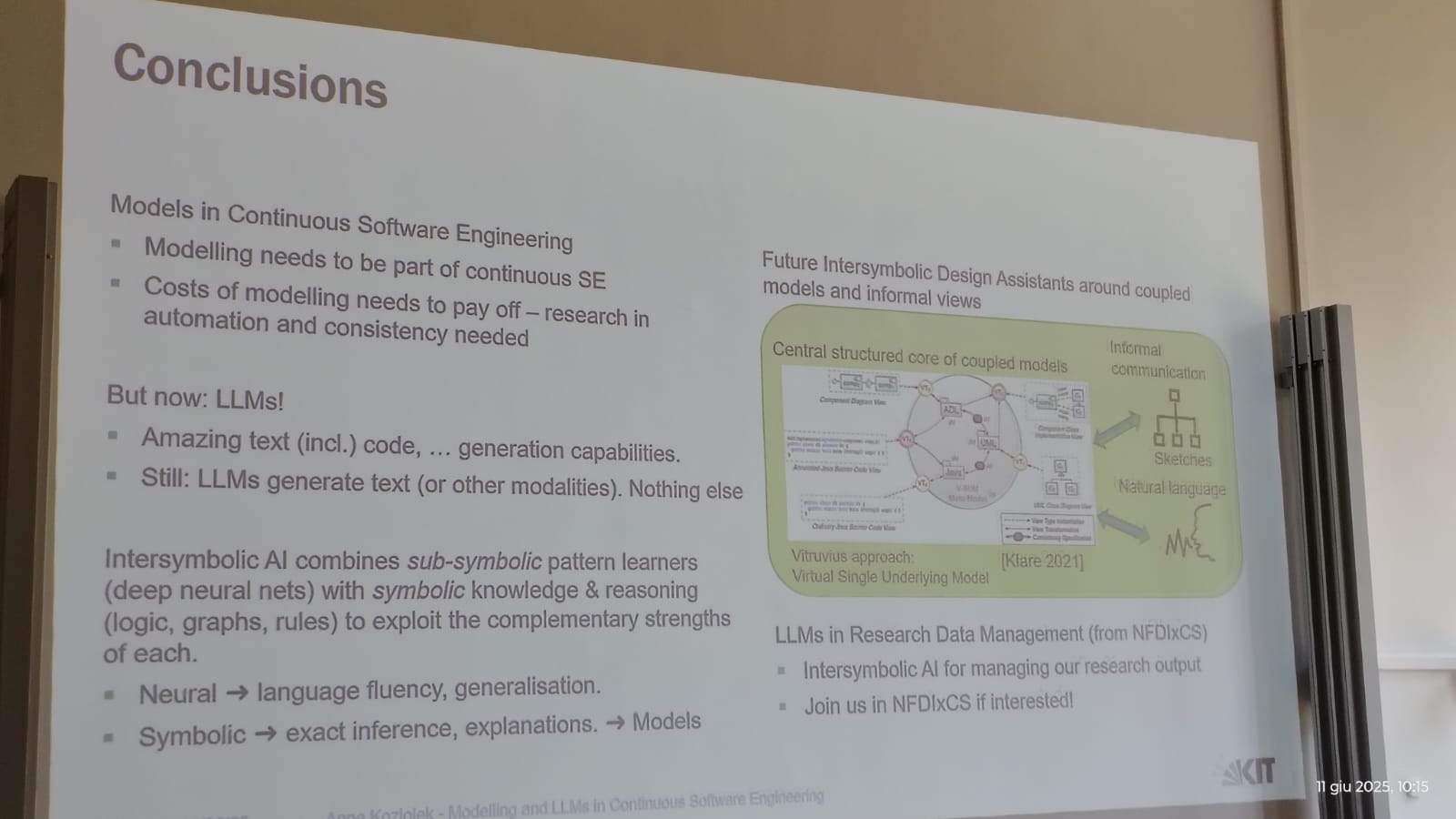
- some of the following slides can be exploited to prepare the slides for the Intervento PINKAMP
-


 {:height 398, :width 852}


-

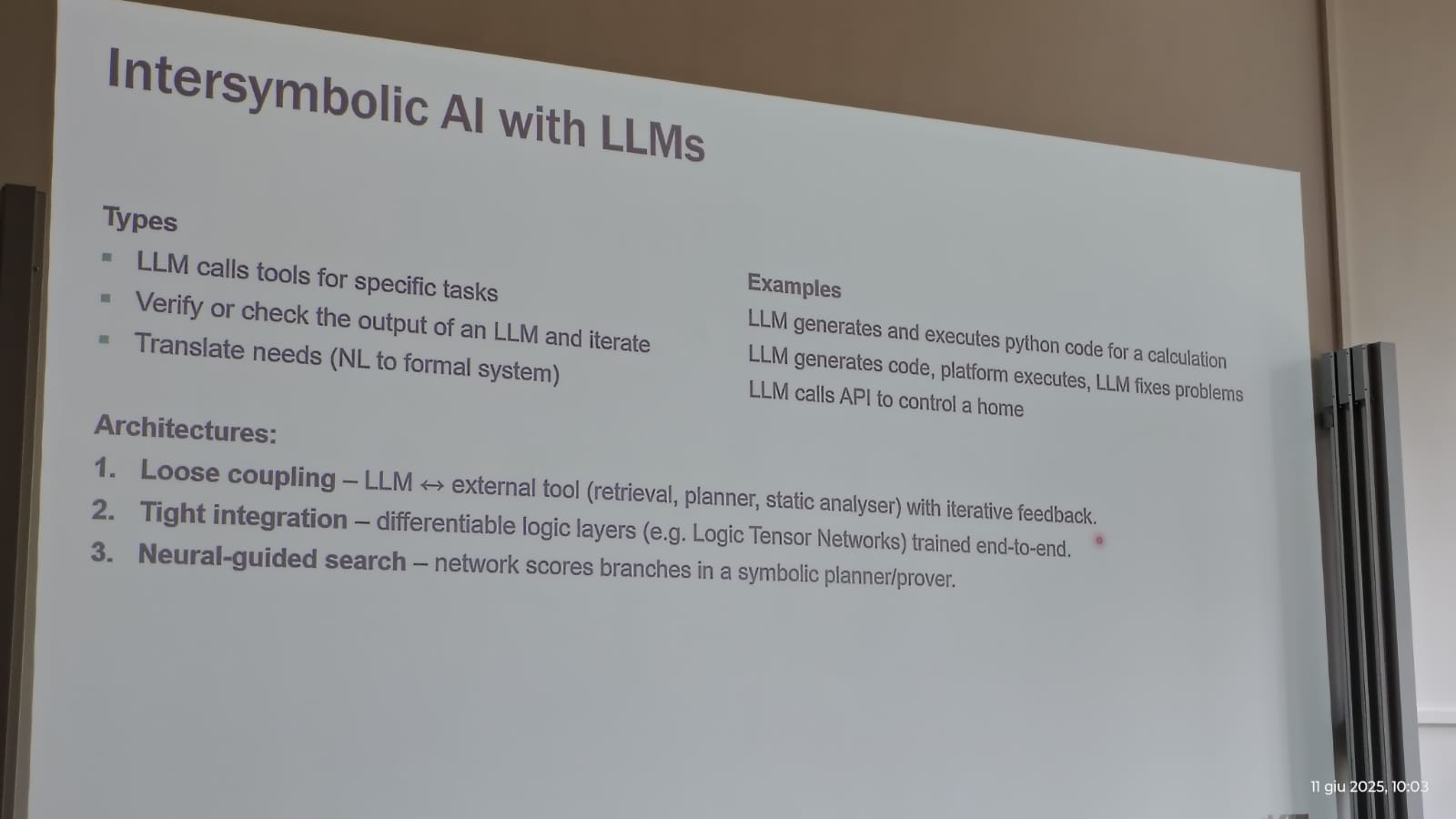
- This is related to Model Context Protocol (MCP) #LLMs #PROJECTS/MOSAICO #reading


- At the beginning the ideal process was the waterfall one. But it seems does not work proprely in most cases. Specifications and implementations are inevitably interwined. This because:
- Cost-efficient modeling
-
-
A metascience study of the low-code scientific field - Jordi Cabot at STAF 2025
collapsed:: true- Can the low-code popularity to help the community grow?
- Looking for win-win
- lens.org has been used to collect articles
- Nowadays there are more low-code papers than those using the MD* keywords
- How can you be sure that arxiv papers are duplicates of papers published somewhere else? #question
- Facts
- Decline in the size of the modeling community
- Low-code compensate that
- Rebrand MODELS with Lowcode?
- Becuase of the so different keywords like MDE/MDA/MBD/.,,, we look so fragmented
- Decline in the size of the modeling community
- Majority of low-code papers are applications
- Can the low-code popularity to help the community grow?
-
An internal DSL for Graphical Modeling Tools Based on GLSP - Georg Hinkel
- Requirements of the language
- GLSP- specific
- Recurring concepts like layout information
- Support for 1:n correspondences
- Avoid separate graphical models #question This is similaro to Eugenia isn't it?
- Source of complexity in existing editors
- Metadata support
- Editor wants to know possible targets of and edge statically
- Integrated Protocols Support
- GLSP- specific
- Used the same technology as NMF Syncronizations
- Requirements of the language
-


